
In the relentless theater of Formula 1, where every millisecond is a battleground, Sebastian Vettel’s 2010 season stands out as a tale of resilience, ingenuity, and unyielding spirit. Imagine a grand symphony where the lead violin s strings begin to fray mid-performance but the musician plays on, crafting a masterpiece with imperfect tools. This is precisely how Vettel managed to break the gearbox of his Red Bull RB6 and yet race to victory, defying mechanical odds and leaving fans and critics alike in awe. Journey with us as we uncover the story behind Vettel’s gearbox saga, the intricate dance between man and machine, and the unshakable drive that propelled him toward triumph.
The RB6: A Mechanical Marvel and its Achilles’ Heel
The Red Bull RB6 wasn t just a racing car; it was a sleek, aerodynamic bullet engineered by Adrian Newey s genius an intricate blend of speed, precision, and cutting-edge technology. Equipped with a Renault engine and a sophisticated gearbox system, the RB6 was built to dominate the 2010 Formula 1 circuit. Yet, like a finely tuned instrument, it had its vulnerabilities. The gearbox, a complex behemoth responsible for translating engine power into raw acceleration, was the Achilles’ heel lurking beneath the surface.
A gearbox failure in F1 is akin to a pianist s fingers slipping during a high-stakes concerto everything can unravel in an instant. But Vettel, aboard the RB6, confronted this problem head-on. His experience would teach the team valuable lessons about durability and adaptation under pressure. The gearbox wasn t simply a piece of hardware; it was a challenge Vettel had to understand, negotiate with, and ultimately outsmart.
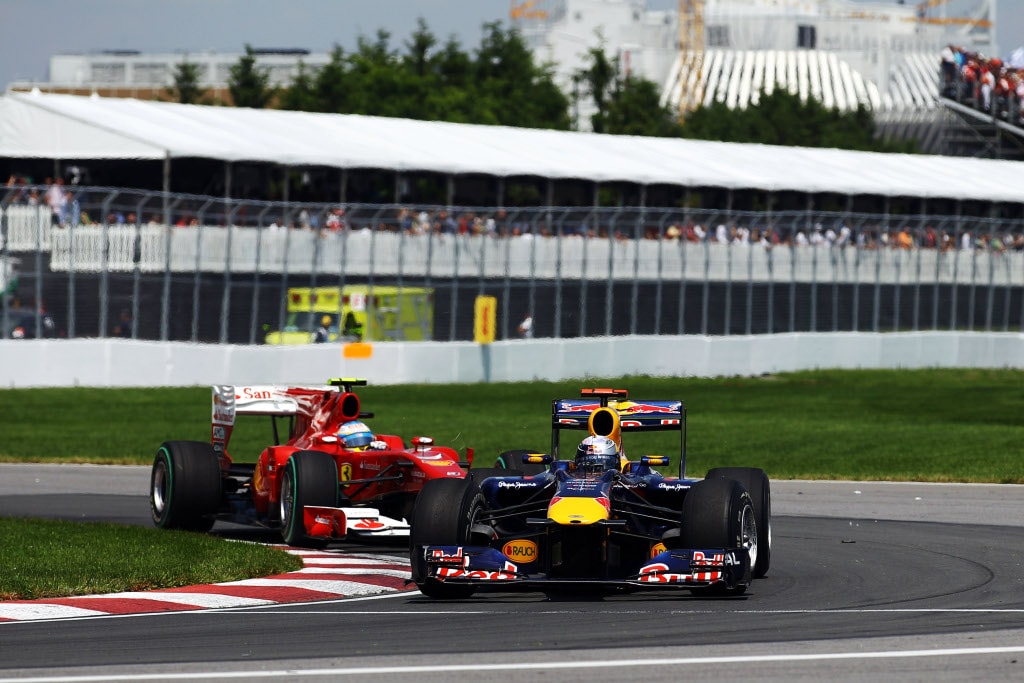 Breaking but Not Beaten: The Incident in Canada
One of the most emblematic moments of Vettel’s gearbox troubles occurred during the 2010 Canadian Grand Prix. Mid-race, his RB6 s gearbox began exhibiting signs of distress a faulty mechanism that could have spelled disaster. But instead of surrendering to the mechanical breakdown, Vettel adapted his driving style as a maestro might adjust his tempo to save a faltering symphony.
He managed gear shifts with razor-sharp precision, minimizing strain on the compromised system. Every downshift was handled with surgical care, every acceleration modulated to protect the fragile internals. This strategic driving was more than just technique; it was a vivid demonstration of Vettel’s intimate connection with his machine a partnership forged in high pressure and high stakes.
The result? Despite the failing gearbox, Vettel won’the race, showcasing not only his exceptional skill but also the robustness of the RB6 when paired with strategic management. It was a victory that sent shockwaves through the paddock and cemented Vettel’s reputation as a driver capable of extracting extraordinary performance from broken machinery.
Psychology of a Champion: Vettel’s Mental Fortitude Amid Mechanical Chaos
Racing in Formula 1 is as much a mental game as a physical one. Facing a malfunctioning gearbox, many drivers would be consumed by fear or frustration. Vettel, however, displayed a psychological resilience rare even among champions. He embraced the brutality of the situation, channeling it as motivation rather than a setback.
Red Bull’s Response: Engineering Around the Crisis
While Vettel’s determination carried much of the load, the Red Bull team s engineering prowess was crucial in managing and adapting to the gearbox issue. The mechanics and engineers were thrust into a reactive battle diagnosing problems mid-race weekends and redesigning internal components to bolster reliability without sacrificing performance.
Behind the scenes, the team employed data analytics and real-time telemetry to monitor the gearbox s health, predicting potential failures and providing Vettel with critical information. The intricate relationship between driver feedback and engineer insight became a lifeline, transforming the RB6 from a fragile weapon to a resilient contender, capable of withstanding brutal stresses.
Each race became a microcosm of innovation, with tweaks, reinforcements, and tactical pit stops extending the gearbox s lifespan. This symbiotic approach between driver and team extended Vettel’s championship contention despite technical hurdles.
Legacy of the RB6 Gearbox Saga: More Than Just a Victory
Vettel’s uncanny ability to break and then manage to win with a compromised RB6 gearbox echoes far beyond individual race wins. It is a metaphor for perseverance in the face of adversity, the art of balancing aggression with prudence, and the profound bond between human and machine.
His 2010 feats taught future teams and drivers that sometimes the race isn’t just about having the perfect car, but rather mastering imperfection with courage and intelligence. It highlighted how a driver s skill set transcends raw speed, encompassing mechanical sympathy, adaptability, and mental endurance.
In the grand narrative of F1 lore, Vettel’s gearbox battles are a vivid chapter where technology, willpower, and strategy collided and melded into an unforgettable story of triumph against the odds.
Conclusion
Sebastian Vettel’s journey through the trials of the RB6 s faulty gearbox stands as a compelling testament to the power of resilience and mastery in Formula 1. Like a virtuoso who refuses to let a snapped string silence his music, Vettel broke the gearbox but refused to break his spirit. His ability to understand, adapt, and overcome mechanical failures while maintaining blistering race pace reveals the quintessence of a world-class driver.
The saga reminds us that in motorsport, victories are often sculpted in moments of crisis. Through engineering brilliance, mental steeliness, and a deeply ingrained connection to his car, Vettel transformed what could have been catastrophic setbacks into game-winning opportunities, crafting a legacy that continues to inspire in the high-octane world of Formula 1.

// Discussion