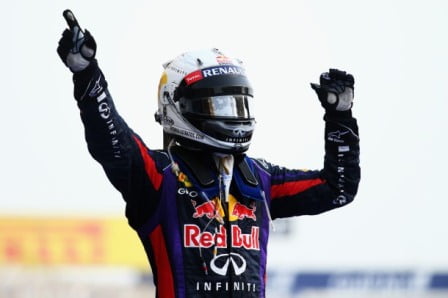
Discover the thrilling narrative of the 2013 Bahrain Grand Prix, a defining race in that Formula 1 season where Sebastian Vettel and the Lotus team showcased contrasting strategies and sheer driving prowess. This article delves into the pre-race expectations, the nail-biting race dynamics, and the tactical depth that shaped the outcome at the sakhir Circuit, highlighting Vettel’s victorious drive against the cunning Lotus tactics.
Introduction to the 2013 Bahrain GP
The 2013 Bahrain Grand Prix, held at the sakhir Circuit, was a critical mid-season race in the Formula 1 calendar. Known for its challenging desert conditions and demanding layout, the Bahrain track tested drivers skill, team strategies, and vehicle engineering. Fans and analysts alike anticipated a fierce contest between Sebastian Vettel, driving for Red Bull Racing, and the Lotus team, notorious for their tactical prowess and competitive pace during that season.
 The Build-Up: Vettel as Title Contender and Lotus Strategy Focus
Coming into the Bahrain GP, Sebastian Vettel was either leading or close to the top of the championship standings. His Red Bull Racing car was renowned for superior downforce and overall pace, making him a frontrunner on any track. However, the Lotus team, with drivers Kimi Raikkonen and Romain Grosjean, had proven their ability to execute shrewd race strategies and strong tire management during qualifying and previous races.
Lotus focused heavily on tire conservation and pit stop timing, understanding that the desert heat and abrasive asphalt of Bahrain could heavily influence tire degradation. Their aim was to repeatedly challenge Vettel’s Red Bull by optimizing these variables and capitalizing on any moment Vettel might face tire wear or pit lane delays.
Race Day: Vettel’s Dominant Performance
From the start, Sebastian Vettel demonstrated remarkable pace and consistency. Utilizing the superior aerodynamics and traction of his Red Bull RB9, he managed to break away from the pack, establishing a significant lead within the early laps. His driving combined smooth cornering with smart energy management, enabling him to maintain tires longer and push hard when necessary.
 Meanwhile, Lotus drivers executed their strategy with precision. Their focus was on extending their first and second stints with minimal tire wear to undercut Vettel during pit stops. At times, this approach closed Vettel’s gap, creating intense pressure. However, despite Lotus s impressive tactical execution, Vettel’s raw pace and well-timed pit stops kept him clear of serious threat.
Lotus Tactics: Analyzing Their Approach
Lotus s strategy life revolved around maximizing tire longevity and playing the long game. The team often favored a two-stop strategy that depended heavily on conserving tires early to make aggressive runs toward the end of the race. This tactic meant that Raikkonen and Grosjean had to manage their pace carefully, balancing speed with tire health.
Another key aspect of Lotus s approach was their adaptive pit stop sequencing. They closely monitored Vettel’s pit timings and adjusted their own stops to keep strategic pressure and attempt an undercut. Unfortunately for Lotus, while these tactical moves reduced the gap at times, they were unable to completely neutralize Vettel’s advantage, partly due to the Red Bull’s superior car performance on this track.
 Technical and Environmental Challenges
The Bahrain GP s desert setting introduced additional complexity, such as sand on the track surface affecting grip levels. Both Red Bull and Lotus faced challenges managing their tire degradation and ensuring their setups handled the tricky, abrasive asphalt. Vettel’s RB9 proved exceptionally well balanced, providing him with stable handling and better tire management under these conditions.
Conversely, Lotus had to fine-tune their suspension setup to adapt to the track s bumpiness and temperature swings between day and night. These environmental factors played a vital role in determining pit strategy and tire choice, ultimately influencing the race s ebb and flow.
Impact on the 2013 Championship
Vettel’s convincing victory in Bahrain strengthened his championship bid, reinforcing his momentum mid-season. The Red Bull team s ability to integrate car performance with race strategy exhibited an ideal synergy that was difficult for rivals like Lotus to counter consistently.
For Lotus, despite falling short in Bahrain, the strategic maturity displayed was a positive takeaway. Their approach in Bahrain reflected their potential to challenge the leading teams by exploiting tactical advantages, which would be crucial in the remaining races of the season.
Conclusion
The 2013 Bahrain Grand Prix was a masterclass in Formula 1 racing that pitted Sebastian Vettel’s speed and precision against the smart, adaptable Lotus tactics. While Lotus showcased strategic intelligence and tire management acumen, Vettel’s superior car and confident driving secured a commanding win. This race not only highlighted the technical and tactical battles that define elite motorsport but also underscored the importance of balancing raw pace with strategic insight. Ultimately, the Bahrain GP was a memorable chapter in the 2013 season, illustrating why Vettel emerged as a dominant force and how Lotus remained a formidable challenger through intelligent racecraft.


// Discussion