
In this article, we dive into the fascinating technical innovation and driving prowess that defined Sebastian Vettel’s 2013 Formula 1 campaign. Specifically, we explore how Vettel and Red Bull Racing exploited the Coanda-effect exhaust system, a controversial yet groundbreaking technology that dramatically influenced the car s aerodynamics and performance. Fasten your seatbelts and get ready to discover how a seemingly small technical detail can pose big challenges and provide a competitive edge on the racetrack.
What is the Coanda-effect Exhaust?
The Coanda-effect exhaust is an aerodynamic innovation that leverages the natural tendency of a fluid stream to adhere to a nearby surface. In the context of Formula 1, this means directing the exhaust gases so they flow along a certain bodywork, such as the diffuser or floor of the car, enhancing downforce in critical areas. This innovation was initially banned by the FIA for its potential to offer extreme performance gains by manipulating airflow in ways that some considered borderline legal or unsafe.
 By cleverly shaping the exhaust outlet and positioning it to maximize the Coanda effect, teams aimed to increase the efficiency of their aerodynamics packages. This meant the diffuser the rear-bottom part of the chassis responsible for generating downforce could gain considerably more grip without adding traditional wings that create drag.
How Sebastian Vettel and Red Bull Mastered the Coanda Exhaust in 2013
In the 2013 season, Sebastian Vettel and Red Bull Racing perfected the application of the Coanda-effect exhaust, turning what was once a controversial concept into a key competitive advantage. The RB9, Vettel’s car, featured an exhaust system that cleverly directed exhaust gases along the floor of the car, improving diffuser airflow and thus rear downforce.
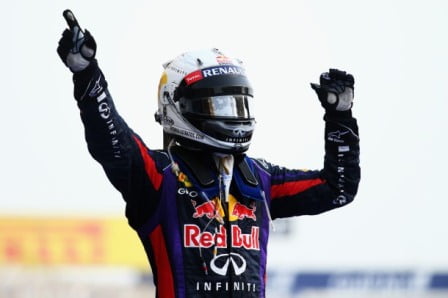
 Vettel’s mastery in exploiting this technology wasn t just about engineering prowess; the German driver s smooth style was tuned perfectly to make the most of these aerodynamic benefits. His ability to maintain high throttle application through corners meant the exhaust gases continually energised the diffuser airflow, providing a significant grip increase. This technical synergy led to a dominant run in the second half of the 2013 season, capturing nine consecutive victories and sealing his fourth consecutive World Championship.
The Impact on Racing Performance and Strategy
The Coanda-effect exhaust system allowed the RB9 to achieve exceptional cornering speeds, particularly on circuits favouring high downforce setups. This gave Vettel a clear edge over his competitors, allowing him to push harder through corners and maintain greater stability during complex maneuvers. Crucially, this also enabled more aggressive race strategies, with Vettel able to preserve tyre life while still extracting maximum performance.
However, this innovation was not without its challenges. Teams had to carefully balance the benefits of added downforce with the cooling requirements of their power units. Managing the heat generated by rerouting exhaust gases demanded careful materials engineering and constant refinement. Additionally, the FIA kept a watchful eye, ready to enforce regulations that would restrict such aerodynamic tricks if deemed too advantageous or unsafe, adding an underlying tension to the technical developments.
Regulatory Hurdles and the Aftermath
Despite its advantages, the Coanda-effect exhaust was banned in subsequent seasons as the FIA sought to clamp down on extreme aerodynamic aids. This decision was part of broader efforts to re-balance the playing field and limit escalating technical arms races that could hinder competition or complicate regulations.
 For Red Bull, this ruling meant rethinking their aerodynamic approach for the 2014 season and beyond. The loss of the Coanda exhaust forced teams to seek alternative methods to generate consistent downforce and maintain competitiveness. Nevertheless, the 2013 use of this technology remains a benchmark moment of innovation in Formula 1 history, illustrating how small aerodynamic details can’translate into huge on-track advantages.
Could Today’s Teams Revive the Coanda Concept?
So here s a playful question for racing fans and engineers alike: With today s advances in computational fluid dynamics, materials, and hybrid powertrains, could we see a modern reinterpretation of the Coanda-effect exhaust? While regulatory frameworks have tightened, innovation finds a way. Perhaps the challenge lies not just in rewriting the rulebook but in discovering clever loopholes or alternative applications that respect the spirit and letter of F1 s technical regulations.
Exploring this possibility invites us to understand that F1 is as much a competition of brains and creativity as it is of speed and skill. The Coanda exhaust saga of 2013 serves as a reminder that pushing boundaries often means venturing into complex regulatory and engineering territory. It also highlights how integral a driver’s style can be in exploiting such technical nuances to the fullest.
Conclusion
The 2013 Sebastian Vettel Red Bull RB9 campaign demonstrated how a deep understanding and clever exploitation of the Coanda-effect exhaust provided a decisive competitive advantage. This innovation helped Vettel dominate the latter half of the season, showcasing the critical intersection of engineering ingenuity and driver skill. Although banned shortly afterward, the Coanda exhaust remains one of the most captivating technical chapters in Formula 1 history. It poses an ongoing challenge and invitation for teams to balance innovation with regulation an eternal tug-of-war that continues to define the spirit of the sport. Will future seasons see new ways to harness the Coanda effect, or will it remain a brilliant but banned relic of the past? Only time will tell.

// Discussion