
In the world of Formula 1, few drivers have inspired as much debate and fascination as Sebastian Vettel during his time at Ferrari. While Vettel’s undeniable talent brought moments of brilliance, a recurring observation among fans and experts alike was the manner in which his driving style appeared to accelerate tire degradation. This article delves into the intricacies of Vettel’s tire management challenges at Ferrari, exploring the technical and psychological nuances behind it. By understanding the broader context, readers will gain insight into why this issue captured so much attention and how it mirrored the many complexities of Vettel’s tenure with the Italian powerhouse.
The signature Vettel Driving Style
Sebastian Vettel’s driving has often been described as aggressive and precise, characteristics that served him well during his dominant years with Red Bull Racing, where He’secured four consecutive World Championships. His ability to push the car to its limits, extract maximum performance through corners, and manage tire wear was exceptional in that environment. However, this style did not translate seamlessly to his stint with Ferrari.
At Ferrari, Vettel’s approach was marked by an acute front-end sensitivity in tire wear. The aggressiveness in corner entries, coupled with a heavy right foot on the throttle, often resulted in accelerated degradation of the front tires, especially the front-left tire which bears the brunt of the wear on most circuits. Fans and technical analysts observed his tendency to overwork the tires, which manifested in decreased grip and increased lap time losses during crucial phases of the race.
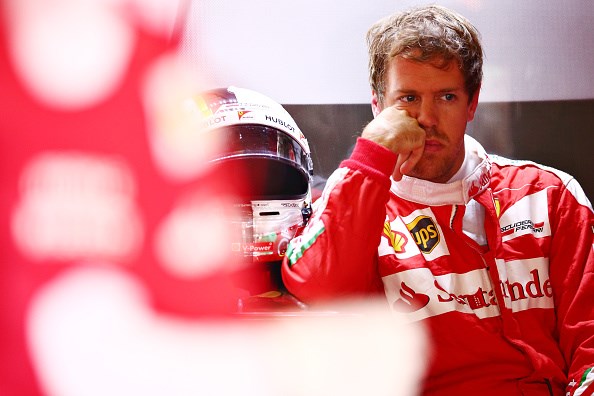 This driving pattern led to a strategic conundrum for Ferrari race engineers, who had to adapt race strategies to compensate for his higher tire wear rates, often leading to earlier pit stops or conservative driving instructions to preserve the tires in the race s latter stages.
The Complex Interaction Between Car and Driver
One of the deeper reasons behind Vettel’s tire issues at Ferrari can be traced to the interaction between his driving style and the car s characteristics. Unlike his time at Red Bull, where the car s setup and aerodynamic design complemented his style, Ferrari’s SF70H, SF71H, and subsequent models exhibited different handling dynamics.
Ferrari’s cars during Vettel’s years sometimes struggled with balance, particularly in terms of front-end grip and chassis stiffness. This forced the driver to compensate by subtly adjusting his input through corners, often increasing the mechanical stress on the tires. Additionally, Ferrari’s power unit performance and chassis setup required a slightly different approach to maximize tire life, which reportedly conflicted with Vettel’s ingrained habits developed over earlier phases of his career.
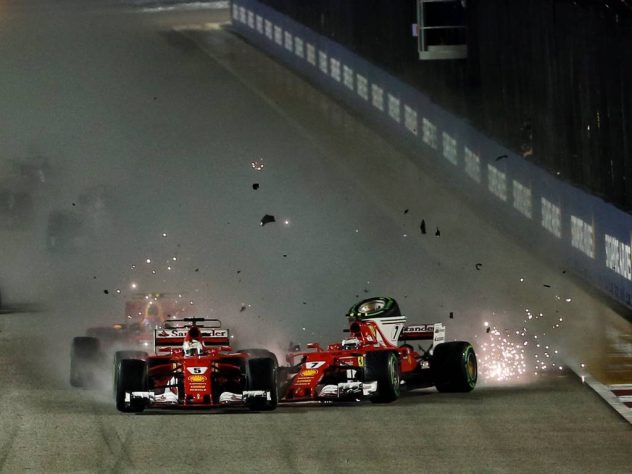 Moreover, the relentless pursuit of performance in Formula 1 means car development is a continually moving target. Any mismatch between a driver s style and car behavior can exacerbate issues like tire degradation. Vettel, a driver known for his meticulous attention to detail, often found himself grappling with these technical compromises, highlighting the complex synergy drivers need to strike with their machines.
Psychological and Strategic Factors
Beyond the technical factors, psychological elements played a role in Vettel’s tire management challenges. The pressure to perform at Ferrari, a team with a rich and demanding legacy, was immense. Expectations ran high and mistakes or shortcomings were magnified under the intense spotlight of media and fans alike.
In several races, observations revealed that Vettel’s frustration with the car s performance pushed him to squeeze every ounce of speed out of the car early in the race. This urgency often impacted tire longevity. The desire to build an early lead or maintain track position might have contributed to the aggressive driving that exacerbated tire wear, often sacrificing the medium to long-term race pace.
Strategically, Ferrari’s race engineers sometimes adjusted Vettel’s race plans in real-time to deal with tire degradation instructing him to conserve tires or alter his aggressiveness. However, this shifting balance between managing tires and maintaining competitive pace was a recurring challenge and a source of tension. It exemplified the fine margins that make Formula 1 so demanding, not only physically but mentally.
The Broader Fascination With Vettel’s Ferrari Era
Why does this aspect of Vettel’s driving at Ferrari continue to capture the attention of F1 fans and analysts? Part of the fascination stems from the contrast between Vettel’s previous success and his struggles at Ferrari, illustrating how even world-class talents can face difficulties adapting to new environments. It also highlights how something as seemingly small as tire management can have outsized effects on race outcomes and championship ambitions.
Additionally, Vettel’s time at Ferrari was peppered with memorable moments both triumphant and tumultuous that endeared him to fans worldwide. The tire degradation debate became a symbol of his complex relationship with the team and its car, reflecting the broader challenges of maintaining peak performance in a fiercely competitive sport.
Ultimately, Vettel’s tire management struggles at Ferrari offer a window into the intricate dance between driver skill, car performance, strategy, and psychology. it’s a reminder that in Formula 1, success is rarely down to raw speed alone, but a symphony of factors that must harmonize perfectly.
Conclusion
Sebastian Vettel’s tenure at Ferrari presents a compelling case study in how driving style impacts tire wear and overall race performance. His aggressive yet precise driving, so effective during his dominant years with Red Bull, met several hurdles in adapting to Ferrari’s machinery and race dynamics. The resulting tire degradation issues were a confluence of car characteristics, driving inputs, strategic decisions, and the immense psychological pressure inherent in racing for Ferrari.
This multifaceted challenge contributed to some of the most captivating moments of Vettel’s career and serves as a testament to the complexity of Formula 1 racing. Fans and experts will continue to analyze and debate this chapter, underscoring the lasting intrigue of Sebastian Vettel’s drive to conquer the scuderia alongside the relentless demands of modern motorsport.


// Discussion