
Have you ever wondered how a driver can overcome a seemingly flawed machine to clinch an improbable victory? The 2017 Hungarian Grand Prix delivered just that a masterclass by Sebastian Vettel, who managed to steer a Ferrari that many saw as less-than-perfect to a stunning win. In this article, we will explore the twists and turns of the 2017 Hungarian GP, diving into Vettel’s strategies, the performance of the Ferrari’sF70-H, and the dramatic moments that defined this unforgettable race.
The setting: Hungaroring and the 2017 Season Context
The Hungaroring is often dubbed Monaco without the barriers due to its tight and twisting layout. Success here demands not just speed, but precision, patience, and adaptability qualities Sebastian Vettel demonstrated in abundance. The 2017 season was marked by the fierce rivalry between Ferrari and Mercedes, with both teams chasing improvements relentlessly. Yet, the Ferrari’sF70-H, while powerful, had its share of handling and balance issues that complicated Vettel’s quest for dominance.
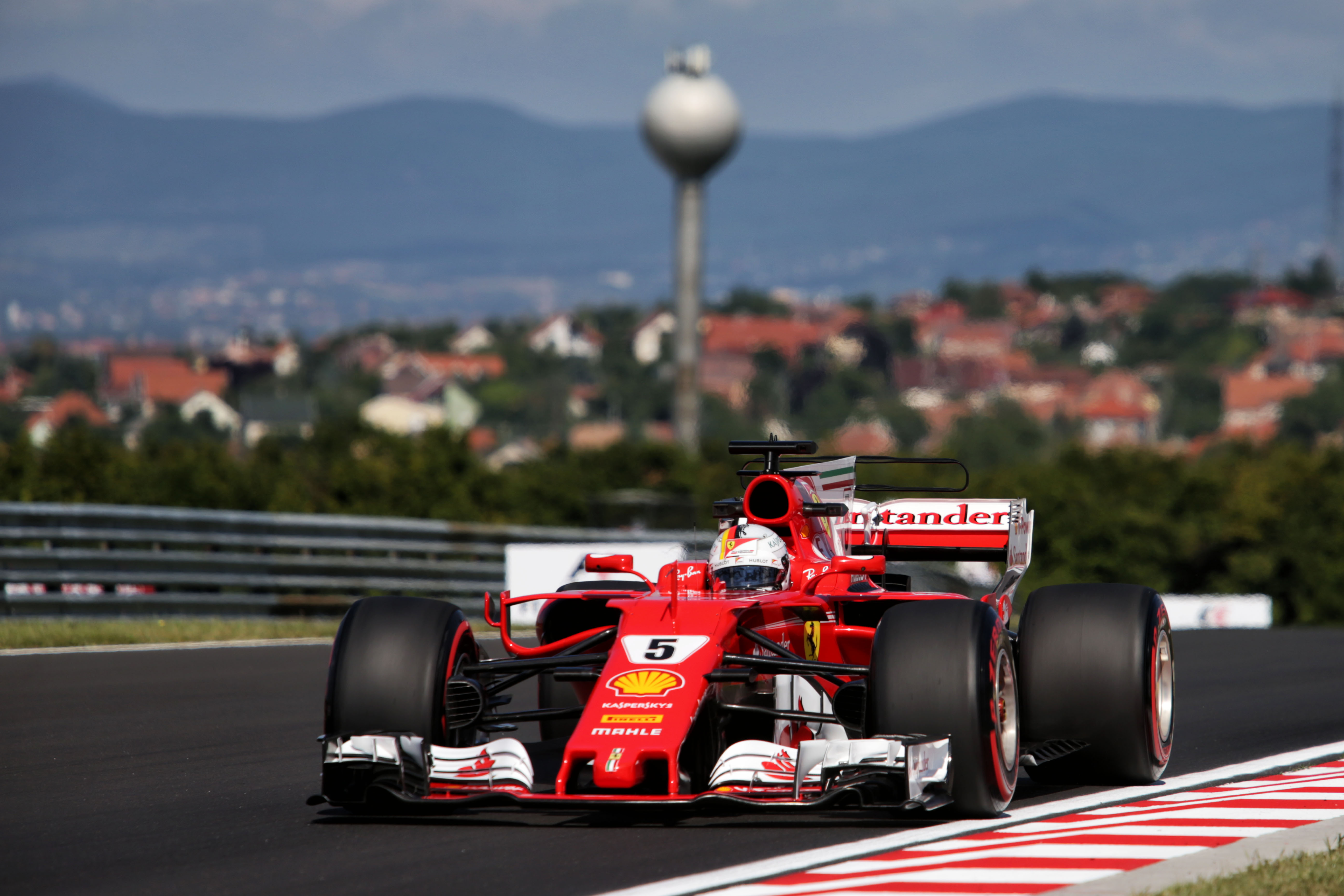 Vettel entered the Hungarian GP eager to capitalize on Ferrari’s strengths while managing the car s quirks throughout the demanding 70-lap race. What followed was a demonstration of driver skill meeting mechanical challenge head-on.
Ferrari’sF70-H: A Car with Potential and Pitfalls
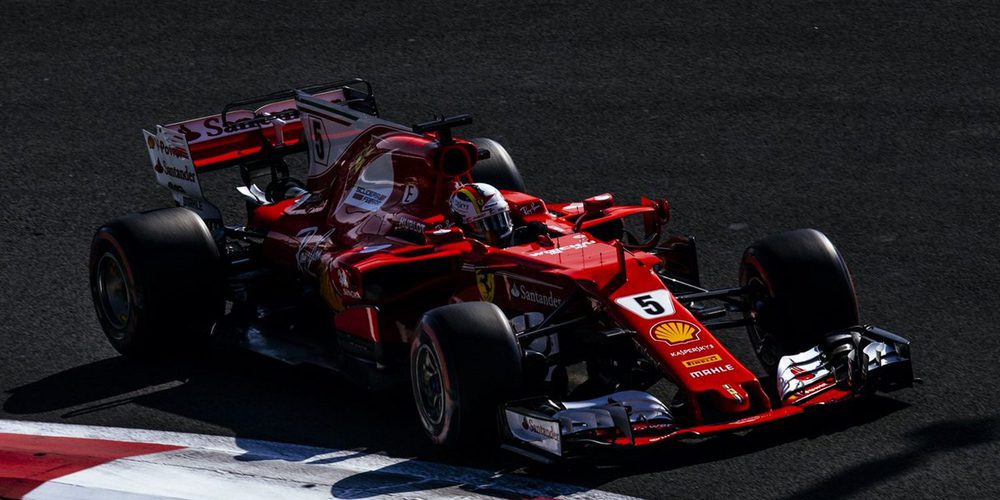
The Ferrari’sF70-H was a remarkable piece of engineering designed to compete against the dominant Mercedes W08 Hybrid. Packing a turbocharged V6 engine and cutting-edge aerodynamics, the sF70-H boasted significant straight-line speed. However, its Achilles heel was its unpredictable handling, especially through the tight corners and elevation changes of the Hungaroring.
This unpredictability led many to question whether Ferrari could truly challenge Mercedes in such a technical circuit. Handling crookedness in a high-stakes race is no easy feat, and this is where Vettel’s talent would make the critical difference. The car often exhibited understeer, making it harder to nail braking points and maintain optimal racing lines without losing precious milliseconds.
 Vettel’s ability to work with the sF70-H s nuances showed in his careful management of tire wear and his tactical approach to cornering ensuring the car s limitations would not prevent a clean race pace.
A Race of Strategy and Nerve: Vettel’s Hungarian GP Performance
The Hungarian GP is notorious for limited overtaking opportunities, making qualifying position crucial. Vettel had a solid qualifying performance, securing third on the grid behind Mercedes Valtteri Bottas and Lewis Hamilton.
At the race start, Vettel demonstrated patience and precision, avoiding early chaos and positioning himself to capitalize on rivals mistakes. The Hungaroring places immense stress on tires, and Vettel’s approach to managing degradation allowed him to maintain a competitive pace throughout the race. His pit stop strategy was equally calculated, turning the timing and execution into an advantage amid the complex battle with Mercedes.
Perhaps the most impressive aspect of Vettel’s race was his mental fortitude. Despite the sF70-H s challenging behavior, he maintained composure, controlling the car through tricky sections and exploiting every opportunity to inch closer to the lead. When Bottas ran into issues later in the race, Vettel’seized the moment courageously, charging into the lead and defending fiercely under pressure.
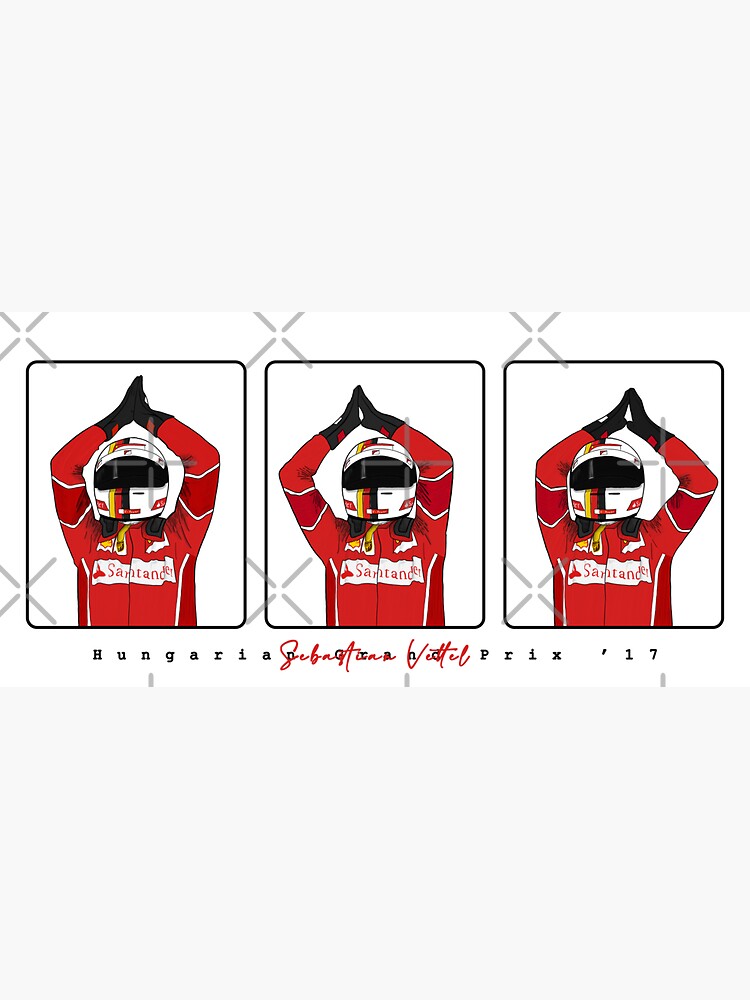 Vettel’s legendary Egyptian Dance celebration after the win was a playful reminder that sometimes, breaking from the norm much like driving a crooked Ferrari to victory requires a little creativity and bravado.
The Challenge of Steering a Crooked Ferrari : Mechanical and Mental
What truly elevates a driver from good to great is the ability to adapt and extract performance from an imperfect machine. The crookedness of the sF70-H forced Vettel to adopt a driving style balancing aggression with caution, ensuring the car remained drivable over long stints.
Mental resilience in Formula 1 is as critical as physical skill. Vettel’s focus under pressure especially when the team radio and battle for position heated up allowed him to make split-second decisions that preserved not just the car s mechanical integrity, but his winning chances. This dynamic illustrates a larger narrative about the 2017 Hungarian GP: victory was not guaranteed by pure speed alone, but through strategic mastery and a symbiotic relationship between driver and machine.
Legacy and Takeaways from the 2017 Hungarian GP
The race marked a pivotal moment in the 2017 season, showing that limitations can be overcome with ingenuity and determination. Vettel’s victory at the Hungaroring revitalized Ferrari’s championship hopes and reminded fans and competitors alike that races are won on grit and adaptability as much as on pace.
Moreover, the Hungarian GP became a highlight reel moment for Vettel, showcasing not only his driving prowess but his ability to entertain and connect with fans a testament to his enduring charisma in the sport.
Conclusion
The 2017 Hungarian Grand Prix was more than a race; it was a test of will, skill, and the delicate dance between man and machine. Sebastian Vettel’s triumph despite the sF70-H s quirks proves an important lesson in Formula 1 that victory often lies in mastering the imperfect, pushing boundaries, and embracing challenges head-on.
So next time you watch a race, ask yourself: can a driver really tame a crooked car and emerge victorious? For Sebastian Vettel at the 2017 Hungarian GP, the answer was a resounding yes.

// Discussion