
In the high-octane world of Formula 1, where milliseconds on the track are often won or lost in the immersive embrace of cutting-edge technology, Sebastian Vettel’s candid admission about his approach to preparation sends ripples through the racing community. This article delves into the intriguing metaphor of Vettel’s racing philosophy, where analog experience trumps digital simulation, and explores how this choice defines his unique appeal as a driver and interviewee.
The Digital Mirage: Understanding the simulator Craze
Imagine a painter preparing for a masterpiece by repeatedly sketching on a digital canvas, every brushstroke calculated and adjusted through software algorithms before ever touching real paint. This is the world most Formula 1 drivers inhabit, spending countless hours in sophisticated simulators designed to replicate every curve, bump, and nuance of the race circuit. Simulators are the modern-day racing driver s crystal ball a means to foresee every potential challenge and reaction, allowing pilots to perfect their lines and strategies from a safe, controlled environment.
Simulators represent the cutting edge of performance optimization, a symbol of Formula 1 s fusion between athletic prowess and technological innovation. Typically, one would expect that every elite driver, including champions like Vettel, would immerse themselves deeply in this digital realm to hone their instincts. However, Sebastian Vettel’s frank confession that he does not use simulators charts a compelling alternative route one where the track, raw experience, and intuition reign supreme.
 Vettel’s Confession: Racing by Feel, Not by Code
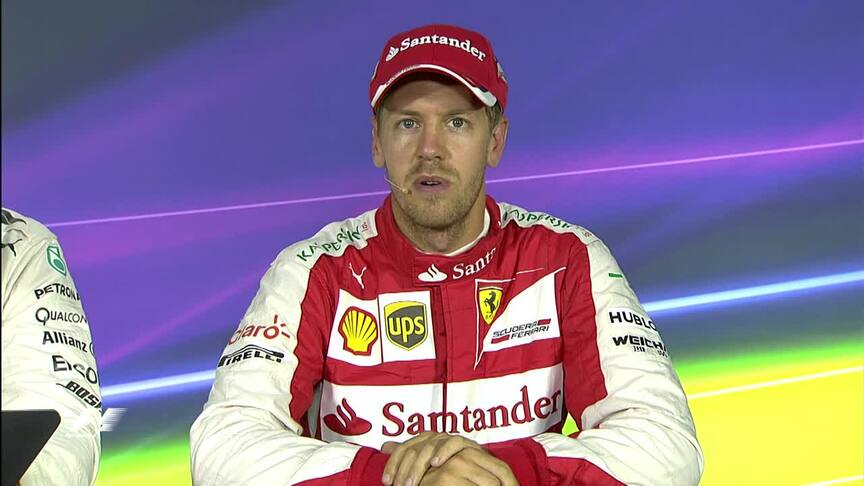
During an insightful interview post-Qualifying in Italy, Sebastian Vettel unveiled his deviation from the norm. Unlike many of his peers who embed themselves deeply into sim rigs, Vettel’s preparation echoes the old-school ethos of mastering the art of racing by immersion and repetition on actual circuits rather than virtual replicas.
This approach mirrors an artist who knows his colors not by seeing them on a screen, but by feeling their texture and the brush s pressure on real canvas. Vettel’s driving is less a mathematical exercise and more an instinctive dance with the car and the road. For a driver of his caliber, this means trusting the senses the tactile feedback from tires gripping asphalt, the vibrations rippling through the chassis, the environmental whispers that simulators can never truly replicate.
By dismissing simulator use, Vettel makes a bold statement: racing, in its purest form, is not merely about data or strategy but about the visceral connection between man and machine. it’s a metaphorical wildfire, unpredictable and fierce, not something that can be boxed into a simulation protocol.
Contrasting Philosophies: Tradition vs. Innovation
This dichotomy places Vettel in a fascinating crossroads between past and future, tradition and technology. While many drivers view simulators as indispensable tools akin to pilots training on flight simulators before ever touching the skies Vettel’s choice suggests a more primal attachment to the sport s heritage.
His stance parallels chess grandmasters who, despite access to powerful computer analyses, sometimes prefer to engage in raw, human versus human matches rather than relying solely on algorithmic preparation. In racing terms, this translates to a certain purity of competition, emphasizing real-time decision-making and adaptability over pre-programmed responses.
It also opens a window into Vettel’s mindset: a racer who values experience, reflection, and perhaps a sense of unpredictability that comes with steering away from the sanitized environment of simulators. In his interviews, one senses a grounded humility, a driver who respects the art of his craft as much as its science.
 The Human Element in a Tech-Driven Sport
In a sport inching closer to automation and algorithmic optimization, Vettel’s preference highlights the enduring importance of the human element. Motorsports is a symphony of engineering and athleticism, but the conductor is always human. The feeling one gets behind the wheel the adrenaline surge, the split-second intuition remain irreplaceable by even the most advanced simulators.
Vettel’s admission isn’t an outright dismissal of technology but rather a subtle reminder: tools are as powerful as the artist s hands wielding them. His success underscores that while simulators offer valuable insights, racing ultimately demands a connection that transcends digital learning a bond between driver and machine, tuned through experience, instinct, and emotional resonance.
Vettel’s Legacy: Beyond Laps and Lap Times
More than just a four-time world champion, Sebastian Vettel’s candid reflections on simulator use add a rich layer to his legacy. His approach challenges contemporary norms and invites fans and fellow drivers alike to reconsider what truly defines mastery in racing.
Vettel embodies a romantic spirit in a high-tech era a figure who races not just to win but to feel the pulse of every twist and turn. His method serves as a metaphorical lighthouse, beckoning a balance between embracing innovation and honoring tradition.
 Conclusion: The Road Less Simulated
Sebastian Vettel’s revelation about eschewing simulators paints a compelling portrait of a driver who races by heart as much as by science. In a sport obsessed with numbers, telemetry, and virtual perfection, his choice is a refreshing metaphor for authenticity, experience, and human intuition.
This interview not only shines light on Vettel’s unique preparation but also serves as a reflection on the evolving nature of motorsports. It reminds us that beneath the helmets and high-tech tools, the soul of racing still beats strongest in the unfiltered connection between a driver and the track.
As the sport hurtles forward with relentless technological progress, Vettel’s path encourages a pause an invitation to cherish the tactile, the instinctive, and the beautifully imperfect art of racing on the road less simulated.


// Discussion