
In the high-stakes world of Formula 1, every upgrade, every aerodynamic tweak, and every engineering innovation holds the potential to redefine a team s fortunes. Ferrari, a name synonymous with speed, passion, and relentless pursuit of perfection, once developed a groundbreaking floor design intended for the 2020 season. Yet, despite its promise, this upgrade never saw the light of race day. This article delves into the story behind the lost Ferrari floor an upgrade that was meant to change the game but ended up as a secret chapter in the scuderia s development history. As we explore the technical intricacies, strategic decisions, and the aftermath for Sebastian Vettel and the team, prepare for a shift in perspective on what could have been one of the most intriguing developments of recent F1 history.
The significance of Aerodynamic Floors in Formula 1
The floor of a Formula 1 car is much more than a simple panel; it is a critical aerodynamic element that directly impacts downforce, drag, and overall car balance. Modern F1 regulations strictly control floor design to manage how airflow interacts with the car, influencing grip and handling performance. Teams spend countless hours in wind tunnels and on track testing minute variations, aiming to gain as much aerodynamic efficiency as possible.
For Ferrari, traditionally one of the most aggressive constructors in aerodynamics, the floor has always been a focus of innovation. The 2020 season brought with it unique challenges new regulations aimed to reduce downforce on several parts of the car, pushing teams to discover novel ways of recouping lost performance. Within this context, Ferrari developed what insiders dubbed the lost floor, a design so unique that it promised to enhance rear downforce dramatically without compromising on drag.
 The Design and Technology Behind Ferrari’s Lost Floor
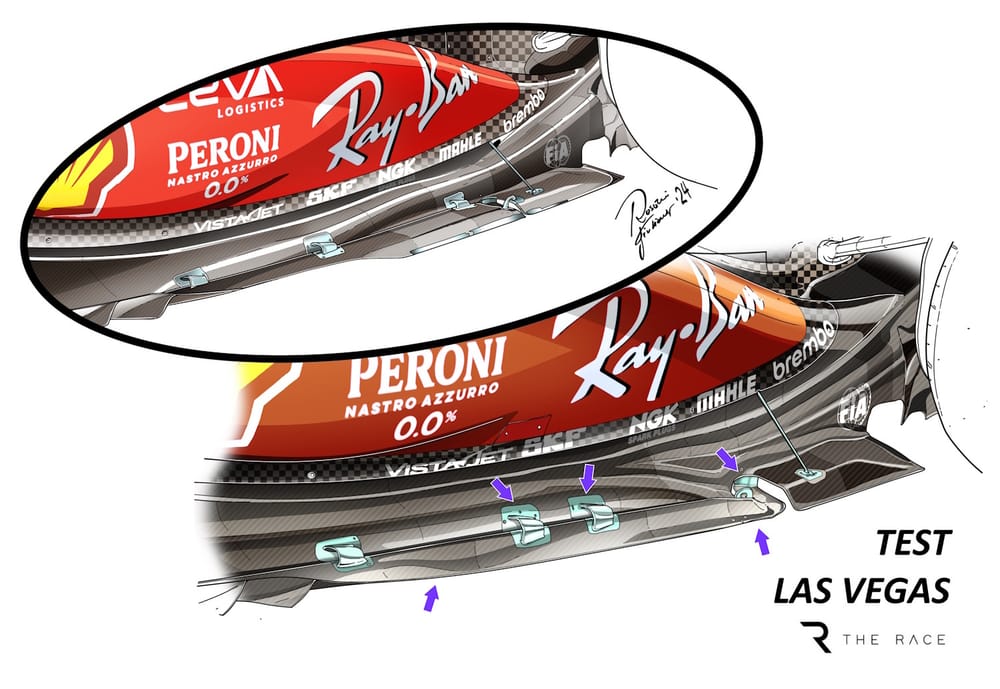
The lost floor was an intricate piece of engineering. Unlike conventional flat floor designs, Ferrari’s iteration featured an aggressively curved edge with carefully sculpted venting channels. These channels aimed to manage the airflow beneath the car, accelerating it and creating a greater ground effect a suction effect that binds the car closer to the track for more grip through corners.
Wind tunnel testing revealed that the design could recover nearly 15% of the downforce lost due to the 2020 aerodynamic restrictions. This might seem incremental, but in a sport where milliseconds determine outcomes, such gains are revolutionary. The new floor s contour also aligned with tighter controls on tire wake and the diffuser s airflow, ensuring stability while increasing cornering speed.
However, translating wind tunnel promise into race track performance involves multiple variables from chassis compatibility and suspension setup to driver feedback and tire management. Ferrari’s engineering team had to balance these factors precisely, making the design not only a technical marvel but also a high-stakes gamble.
Why The Lost Floor Never Reached the Racetrack
Despite the promising data, Ferrari made the unexpected decision not to deploy the floor upgrade during the 2020 season. Several reasons contributed to this critical choice. Firstly, the COVID-19 pandemic severely disrupted the F1 calendar and development schedules, forcing teams to prioritize reliability and conservative upgrades over high-risk innovations.
Secondly, pre-race testing and simulation indicated potential compromises in car stability when the floor was combined with the existing chassis setup. The risk of introducing an unstable platform during crucial race weekends was a daunting prospect, especially considering Ferrari’s performance pressure in a highly competitive environment dominated by Mercedes and Red Bull.
Furthermore, driver adaptation played a role. Sebastian Vettel, who had just joined Ferrari in 2020, was still acclimating to the team’s car characteristics. An abrupt change in underfloor aerodynamics can alter vehicle feedback drastically, complicating a driver’s ability to push confidently to the limit.
Ultimately, Ferrari opted to shelve the upgrade, focusing instead on more incremental improvements. This decision, while pragmatic, marked the lost floor as a tantalizing what if for fans and engineers alike.
Implications for Sebastian Vettel and Ferrari’s 2020 Campaign
The 2020 season was a transitional year for Sebastian Vettel and Ferrari alike. Returning to Ferrari after a long stint elsewhere, Vettel faced challenges in adapting to a car that struggled with aerodynamic inefficiencies and balance issues. The missing floor upgrade could arguably have alleviated some of these challenges by providing additional rear grip and stability.
With the lost floor upgrade off the table, Vettel often reported handling problems, particularly in medium to high-speed corners where downforce is critical. This resulted in mixed performances that didn’t meet the high expectations placed on both driver and team. Ferrari finished a disappointing sixth in the Constructors Championship, well behind their traditional rivals.
In hindsight, the lost floor represents a missed opportunity to bolster Vettel’s confidence in the car and improve overall team performance during a pivotal time. Any advancements in aerodynamics that could have sharpened the sF1000 s competitiveness might have altered race outcomes and morale within the team.
The Legacy of the Lost Floor and Lessons for the Future
The story of Ferrari’s lost floor serves as a compelling case study in F1 development strategy. It underscores the delicate balance teams must navigate between innovation and reliability, potential gain and potential risk. The existence of a promising design abandoned before race day illustrates how external factors from pandemic disruptions to team dynamics significantly shape F1 technology deployment.
Moreover, the lost floor emphasizes the importance of comprehensive integration testing. Even the most promising aerodynamic components require harmony with chassis, suspension, and driver styles. Ferrari’s cautious approach, while disappointing to fans eager for breakthroughs, highlights a responsible management of performance development under pressure.
Interestingly, the influence of such discarded innovations is rarely lost. Engineering insights from the lost floor have trickled into Ferrari’s subsequent concepts, informing the designs of future cars. As F1 continues to evolve with new regulations focusing on ground effect and aerodynamics, the lessons learned from 2020 s un-raced upgrade remain invaluable.
Conclusion
Ferrari’s lost 2020 floor upgrade stands as a striking example of innovation deferred not failure, but a strategic pause in a relentless pursuit of excellence. The sophisticated design promised to elevate performance and redefine aerodynamics for the team and Sebastian Vettel’s racecraft alike. Although the upgrade never took to the track, its legacy lingers in the depths of Ferrari’s development archives, a silent testament to a road not taken.
In the swirling pressures and demands of Formula 1 racing, not every breakthrough is immediately visible on race day. Sometimes, the greatest evolutions are those that remain hidden, quietly shaping the future while tantalizing fans with the echoes of what could have been. Ferrari’s lost floor invites us to rethink how success in Formula 1 is measured not just in trophies and circuits won, but in the courage to innovate, the wisdom to pause, and the enduring spirit to push forward.


// Discussion