
In the high-octane world of Formula 1, team orders often dictate the outcome of races, steering drivers to prioritize team strategy over personal glory. Yet, moments of defiance where drivers choose to race against these orders are what etch unforgettable rivalries in the sport’s history. One of the most compelling instances of this tension occurred between Sebastian Vettel and his Ferrari team, echoing the iconic “Multi 21” controversy. This article explores Vettel’s clash with Ferrari’s team directives, the implications of his choices, and how these moments may signal a shift in the driver-team dynamic moving forward.
The Historical Context: The Multi 21 Legacy
Before diving into Sebastian Vettel’s modern-day defiance, it’s important to understand the backdrop of the much-recounted “Multi 21” incident involving Vettel’s teammate, Lewis Hamilton’s rival, Sebastian Vettel during their time at Red Bull Racing. In 2013, Red Bull’s team orders instructed Vettel to hold position behind his teammate Mark Webber during the Malaysian Grand Prix. Vettel ignored these instructions, overtook Webber, and secured a controversial win. This incident not only strained relationships within the team but also sparked a wider debate across Formula 1 about the morality and utility of team orders.
Fast forward to Vettel’s tenure with Ferrari, a team renowned for its strict strategic discipline and high expectations from its drivers. Instances similar to the Multi 21 scenario surfaced, highlighting the tension between individual drivers racing instincts and the team’s strategic goals.
Vettel’s Defiance Against Ferrari Team Orders
During Vettel’s time at Ferrari, he found himself at the center of a storm when he chose to ignore direct team orders a move that resonated loudly with fans and critics alike. Despite clear instructions to maintain position and yield to teammate Charles Leclerc, Vettel pushed ahead, challenging not just a teammate but the very foundation of Ferrari’s strategic framework. This defiance was emblematic of a driver fiercely determined to fight for his own success and legacy.
 Vettel later admitted that ignoring team orders was not right, an acknowledgment that demonstrated his awareness of the broader implications but also underscored the passion and pressure driving his decision. His actions sparked an internal debate within Ferrari: should a driver always comply with team commands, or is there room for individual ambition within the collective effort?
Lewis Hamilton s Perspective and Ferrari’s Internal Dynamics
The rivalry intensified not only within Ferrari but also in the wider Formula 1 landscape, especially as Vettel found himself in direct competition with Lewis Hamilton. Hamilton, known for his laser focus and occasional disregard for team orders when it suited his championship aims, has often been described as zoned in on his opportunities during races. Ferrari, observing this, was caught between controlling their drivers and harnessing their competitive fire.
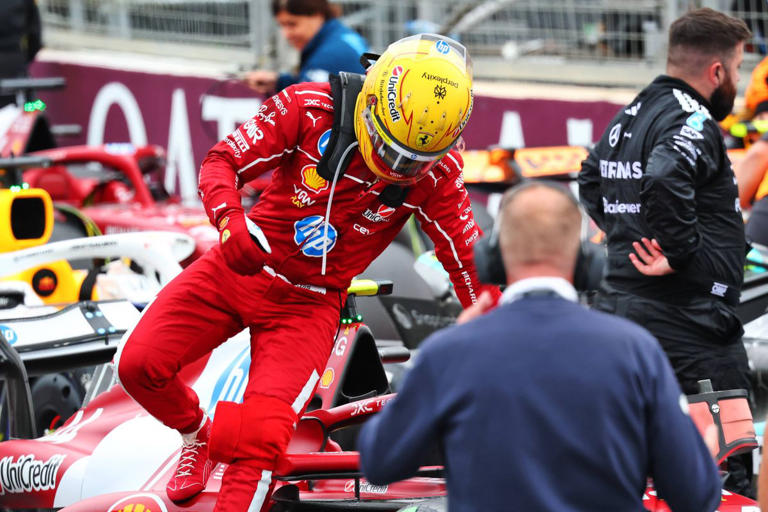
Charles Leclerc and Vettel: A New Generation of Ferrari Rivalry
Adding further complexity to the situation is Charles Leclerc, Ferrari’s young and highly talented star, who has openly challenged Vettel’s position within the team. The dynamic between the two drivers at Ferrari presented a uniquely modern interpretation of team orders and intra-team competition. Leclerc s emergence brought fresh challenges to Vettel’s status, intensifying on-track battles and off-track negotiations.
 Ferrari, tasked with managing this internal rivalry, often resorted to team orders to maximize strategic benefits, but the drivers unwillingness to fully comply revealed the cracks in this approach. Vettel’s defiance was partly a reflection of the pressure exerted by a fast-rising teammate, and his public admission about the mistake was a rare glimpse into his internal conflict a driver torn between his competitive spirit and his role within a team framework.
The shift in Perspective and What It Means for Formula 1
Vettel’s defiance, alongside the strategic responses from Ferrari and Hamilton s example, suggest that Formula 1 might be approaching a new era where the relationship between drivers and teams is more fluid and complex. As drivers become more vocal about their desire for autonomy and teams grapple with balancing order and freedom, the traditional model of team orders is being questioned.
The fallout from incidents like Vettel’s refusal to follow orders could lead to significant changes in how teams manage intra-team rivalries. Instead of rigid team orders, future strategies may lean towards negotiation, mutual understanding, and perhaps even a toleration of on-track competition between teammates so long as it doesn’t jeopardize the team s larger ambitions.
This evolution could make the sport even more exciting to watch as fans witness not just the battle of machines and skill but a psychological chess match between teammates who are both collaborators and competitors.
Conclusion
The story of Sebastian Vettel ignoring Ferrari’s team orders, reminiscent of the multi-layered “Multi 21” legacy, is more than just a racing anecdote. It highlights the shifting power dynamics between drivers and teams in modern Formula 1. Vettel’s defiance, coupled with his candid reflections, invites fans and teams alike to reconsider the role of team orders in an era where driver individuality competes with team cohesion. As the sport evolves, the balance between cooperation and rivalry will continue to shape thrilling narratives on and off the track, promising a more unpredictable and emotionally charged future for Formula 1.


// Discussion