
Discover the fascinating story behind the RB6 s rear wing innovation a phenomenon that anticipated the modern Drag Reduction System (DRS) long before it officially became part of Formula 1. This article explores the concept of the rear wing stall that emerged from Red Bull Racing’s RB6 chassis, revealing how this technological ingenuity not only redefined racing strategies but also inspired future aerodynamic developments in the sport. Prepare to shift your perspective on how DRS evolved and appreciate the ingenuity that came before the official system existed.
The Genesis of Rear Wing Stall on the RB6
In the 2010 Formula 1 season, Red Bull Racing introduced the RB6, a car that featured groundbreaking aerodynamic advancements. One of the most intriguing elements was the innovative use of the rear wing to create a controlled stall. This wasn t a stall in the traditional sense, which usually implies a loss of control, but rather a deliberate aerodynamic setup that drastically reduced drag and increased straight-line speed.
The RB6 s rear wing was cleverly engineered to decrease downforce under certain conditions, effectively stalling the wing to reduce air resistance. This manipulation of airflow allowed the car to accelerate faster on straights without sacrificing the critical downforce needed in corners. The effect was a sneak preview a technological whisper of what modern Drag Reduction Systems would later formalize and regulate at the highest levels of motorsport.
Understanding the Mechanics Behind Rear Wing Stall
The fundamental principle behind the rear wing stall involves changing the angle of attack or geometry of the wing elements to reduce aerodynamic drag. By stalling the wing, airflow separates from the surface, drastically lowering the rear downforce and allowing the car to slice through the air more efficiently.
The RB6 s rear wing stall was subtle but effective. Unlike the DRS, which uses an adjustable flap controlled by the driver and regulated by race control, the RB6 s system achieved this aerodynamically via passive or semi-active methods. This could include flexible wing components or clever airflow channeling that caused the rear wing to lose downforce only in specific aerodynamic scenarios effectively giving the car a “mini-DRS” effect without a movable element.
This innovation can be seen as a precursor to later developments, such as McLaren s mini-DRS rear wing changes, which leveraged small adjustments in the wing s structure to improve drag reduction, as documented in detailed technical analyses and images of their rear wing designs.
The RB6 Rear Wing Stall vs. Modern DRS: A Comparative View
The official Drag Reduction System introduced by Formula 1 in 2011 revolutionized overtaking by allowing drivers to temporarily reduce rear wing drag via an adjustable flap. The driver could activate the system in designated zones, gaining higher top speeds to improve passing opportunities.
In contrast, the RB6 s rear wing stall was a passive aerodynamic trick. It didn’t provide drivers with direct control or standardized operational zones like modern DRS. Instead, it relied on the car s aerodynamic design and conditions such as speed and airflow to activate the stall effect. While it lacked the precision and regulatory clarity of the official system, it demonstrated a clear understanding of how reducing downforce at the right moments can yield significant performance benefits.
Therefore, the RB6 s innovation is often considered a DRS before DRS, illustrating that the quest for drag reduction and enhanced straight-line speed has deep roots in Formula 1 engineering.
Visualizing Rear Wing Aerodynamics: The Evolution Illustrated
To appreciate the intricacies of rear wing design and the evolution of drag reduction technologies, one can examine detailed imagery and diagrams that highlight how these systems function.
 For instance, recent technical insights into McLaren s rear wings show further mini-DRS changes, which adjust the wing s components to control airflow with more granularity an evolution inspired by predecessors like the RB6.
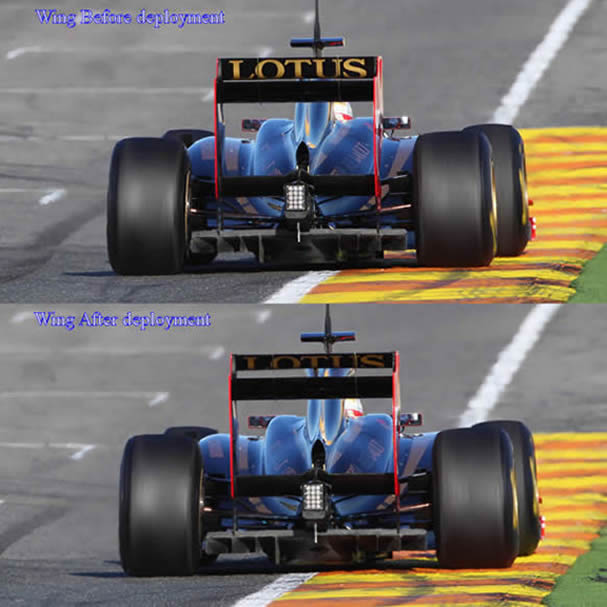 These diagrams help illustrate the before-and-after states of adjustable wing designs, emphasizing how even small changes in angle or flap configuration can dramatically alter drag and downforce balance.
Moreover, the cultural impact of rear wing technologies extends beyond engineering, influencing fan merchandise and creative expressions such as F1-themed hats modeled after rear wing designs, symbolizing the deep connection between fans and the sport s technical marvels.
 Implications and Impact on Formula 1 Racing
The RB6 s rear wing stall exemplifies the innovative spirit that defines Formula 1 engineering. By exploiting aerodynamic principles to reduce drag without compromising cornering ability, Red Bull Racing gained crucial advantages in qualifying and race pace. This innovation contributed to the RB6 s dominance in the 2010 season, delivering multiple race wins and ultimately the World Constructors Championship.
The legacy of this technology goes beyond immediate results. It opened the door to new ways of thinking about passive and active aerodynamic aids, influencing rulemakers and engineers alike. The official adoption of DRS in the following year reflects how the sport recognized and codified the benefits observed in these early aerodynamic experiments.
Conclusion
The story of the RB6 s rear wing stall is a captivating chapter in Formula 1 history that challenges us to rethink the timeline of aerodynamic innovation. This DRS before DRS demonstrated that the pursuit of reducing drag to maximize speed has been a key strategic and technical goal long before official systems were implemented.
By ingeniously manipulating airflow and wing behavior, the RB6 not only gained a competitive edge but also inspired the evolution of rear wing technologies that continue to shape modern Formula 1 racing. Understanding this evolution enriches our appreciation of the sport s relentless quest for performance, where every aerodynamic advantage no matter how subtle can redefine what is possible on the track.



// Discussion