In the world of Formula 1 racing, few drivers have left as significant a mark as Sebastian Vettel. His career has spanned multiple teams, most notably Red Bull Racing and Ferrari, where he experienced varying degrees of success. This article delves into Vettel’s performance at both teams by analyzing his win rates 38% with Red Bull and 14% with Ferrari and unfolds the untold story behind these statistics. From team dynamics to car development and race conditions, we will explore the factors that influenced Vettel’s success across these two iconic F1 factories.
Vettel’s Impact at Red Bull Racing: A Period of Dominance
When Sebastian Vettel joined Red Bull Racing, he became the face of a team on the rise. His tenure at Red Bull was marked by intense growth, technological innovation, and a well-oiled strategy that helped him clinch an impressive number of victories. With a win rate of 38%, Vettel’s time at Red Bull’stands as a testament to his sheer talent combined with a car that was built to win.
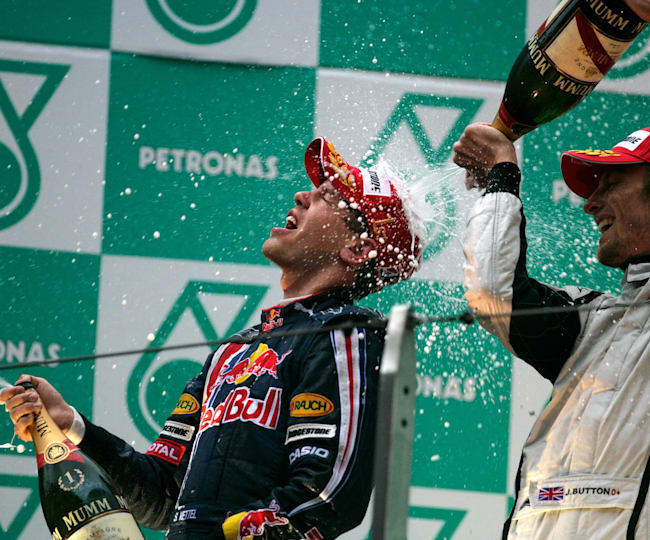
Under the guidance of team principal Christian Horner and technical mastermind Adrian Newey, Vettel thrived in an environment that nurtured precision and innovation. From 2010 to 2013, Vettel won four consecutive World Championships, dominating his competitors with consistency and speed. His win percentage during this era remained high due to the combination of driving finesse and a superior car package.
The Ferrari Chapter: Challenges Behind a Modest Win Rate
Transitioning to Ferrari in 2015, Vettel faced a different set of challenges. His 14% win rate reflected not a decline in his skills but rather the complexities associated with Ferrari’s team dynamics, car development struggles, and fierce competition.
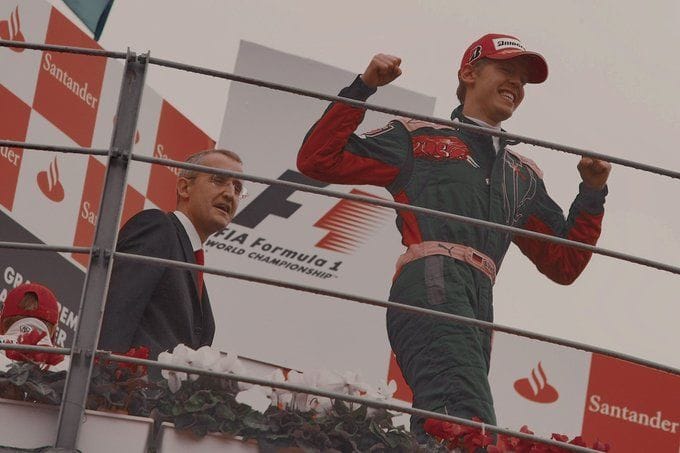 Ferrari, a storied team with a rich heritage, presented Vettel with high expectations. Unlike Red Bull, where Vettel was the emerging star, Ferrari had a culture that demanded immediate results amidst intense political pressures and frequent strategy shifts. This atmosphere sometimes hindered Vettel’s ability to maximize his performance fully.
Car reliability and competitiveness varied significantly during Vettel’s Ferrari days. Despite Ferrari’s efforts to develop a car capable of matching the dominant Mercedes AMG machinery, the team often fell short in the areas of power unit efficiency, aerodynamic balance, and race strategy. Vettel frequently battled wheel-to-wheel with champions like Lewis Hamilton and teammate Charles Leclerc, making wins harder to come by.
Moreover, Vettel’s Ferrari period was punctuated by moments of brilliance shadowed by incidents and mechanical failures. Unlike the clear dominance he enjoyed at Red Bull, Ferrari’s variable performance meant Vettel was often forced to rely more on racecraft and consistency rather than outright superiority.
Team Dynamics and Technical Factors Influencing Win Rates
The stark contrast between the 38% and 14% win rates across the two teams is not solely attributable to Vettel’s driving capabilities. Instead, it reflects a broader narrative involving car performance, team strategies, and F1 s competitive landscape during these periods.
- Car Performance: Red Bull’s RB series, especially the RB7 and RB9, were technological marvels. Meanwhile, Ferrari’struggled to keep up with Mercedes during the hybrid era, contributing to Vettel’s lower win statistics.
- Team Stability: Red Bull enjoyed a more stable and supportive environment under Horner and Newey, allowing Vettel to focus purely on racing. Ferrari’s internal challenges often translated into on-track inconsistencies.
- Competition: Vettel’s peak Red Bull years coincided with a transitional period among rival teams, while his Ferrari years saw the rise of Mercedes dominance and increased competitive pressure.
 The above image encapsulates Vettel’s battle on track, often caught between the powerful forces of Red Bull, Ferrari, and Mercedes, all vying for supremacy. Such fierce competition played a massive role in shaping his win records.
The Legacy of Vettel’s Win Rates: Beyond the Numbers
While statistics provide a quantitative measure of Vettel’s achievements, his legacy across both teams transcends those numbers. At Red Bull, his era of dominance helped cement the team s reputation as a Formula 1 powerhouse. His record-setting four consecutive championships remains one of the sport s defining feats.
At Ferrari, Vettel’s journey was marked by resilience and determination. Though wins were harder to come by, his leadership helped refine the team s strategies and car developments that paved the way for future talents. He was a mentor figure and showcased moments of pure brilliance that rallied both fans and teammates alike.
His experience across these contrasting teams also highlights the multifaceted nature of Formula 1, where driver talent is only one part of a much larger equation involving engineering excellence, strategic acumen, and sometimes, sheer luck.
Conclusion
Sebastian Vettel’s win rates of 38% at Red Bull and 14% at Ferrari tell a story deeper than mere statistics. These figures reflect the varying circumstances he encountered from an era of dominance backed by a cutting-edge car at Red Bull, to a challenging phase at Ferrari marked by fierce competition and developmental hurdles.
Understanding these contexts helps to appreciate Vettel’s career in its entirety, recognizing his skills, adaptability, and influence in Formula 1 s evolving landscape. His journey underscores that success in F1 is often a blend of individual excellence and the synergy with the machine and team behind the driver.
Ultimately, Vettel’s legacy is one of exceptional talent navigating the peaks and valleys of Formula 1 history, leaving an indelible mark on both Red Bull and Ferrari chapters of his illustrious career.


// Discussion