
When we think back to Sebastian Vettel’s remarkable 2010 season with the Red Bull RB6, many marvel at his blistering speed, consistent qualifying performances, and racecraft. Yet one intriguing aspect often flies under the radar: Vettel never crashed the RB6 during qualifying sessions. His only spins and mishaps happened during races. This remarkable consistency in qualifying a critical phase that shapes the weekend has led to questions and curiosity among fans and analysts alike. What was it about Vettel’s approach, mindset, or the RB6 itself that kept him so composed and precise on Saturdays, yet led to riskier outcomes when the race weekend culminated?
The RB6 s Engineering and Reliability: A Qualifying Gem
The 2010 Red Bull RB6, designed by Adrian Newey, was a technical masterpiece. Built with a strong focus on aerodynamic efficiency and stability, the RB6 offered Sebastian Vettel a rocket-ship in qualifying, where every tenth of a second counts. But what stood out wasn t merely raw pace it was how stable and predictable the car felt when Vettel pushed it to its limits during qualifying runs.
On a qualifying lap, drivers extract absolute maximum performance over just a couple of slow laps, often manipulating every detail, from brake bias to engine modes. The RB6 excelled under these conditions, offering Vettel a tool that was responsive yet balanced, allowing him to push very close to the edge without sudden loss of control. This meant Vettel could confidently dial in his laps, stacking multiple flying laps with minimal errors.
 Vettel’s RB6 was not only fast but also adaptable to varying track conditions, which made it less prone to sudden spins or crashes especially important in qualifying when track grip levels can fluctuate dramatically. The team s data-driven approach, combined with Vettel’s feedback, enabled fine-tuning between sessions, stabilizing setups and reducing risk factors.
Vettel’s Mentality and Approach: Calculated Precision
Any Formula 1 driver s ability to succeed hinges on the right balance between aggression and control. Vettel’s qualifying performances with the RB6 exhibited an extraordinary level of mental discipline and unwavering focus. Unlike many rookies or even seasoned drivers who risk pushing slightly too hard and crossing the edge during flying laps, Vettel’s approach was methodical.
He keenly understood the limits of both himself and his car. In qualifying, Vettel’s goal was always clear: extract the maximum without hitting the walls. Each lap was a controlled risk rather than reckless gambit. This mindset ensured that while he was fast often setting pole positions he maintained a threshold of safety that prevented mishaps.
By contrast, race conditions introduce multiple variables such as traffic, tire degradation, and unpredictable battles, pushing Vettel into different mental territory. The need to overtake or defend, combined with fluctuating track grip and the physical toll of race distance, often resulted in spins or mistakes where his calculated qualifying approach gave way to more instinctual, high-pressure reactions.
The Unique Pressure Dynamics of Qualifying vs. Racing
Understanding the difference between qualifying risks and race risks is essential to see why Vettel’s crashes were limited to races. Qualifying is a short burst of all-out speed, where drivers aim for one perfect lap (or a few). The preparation and setup for maximum performance create ideal conditions for controlled aggression.
Meanwhile, races require sustained concentration over many laps, tire management, strategic maneuvering, and responding to other drivers moves. These factors significantly increase the chance of error. Vettel’s spins in races didn’t stem from lack of skill but rather from the complex, dynamic nature of racing, where unpredictability reigns.
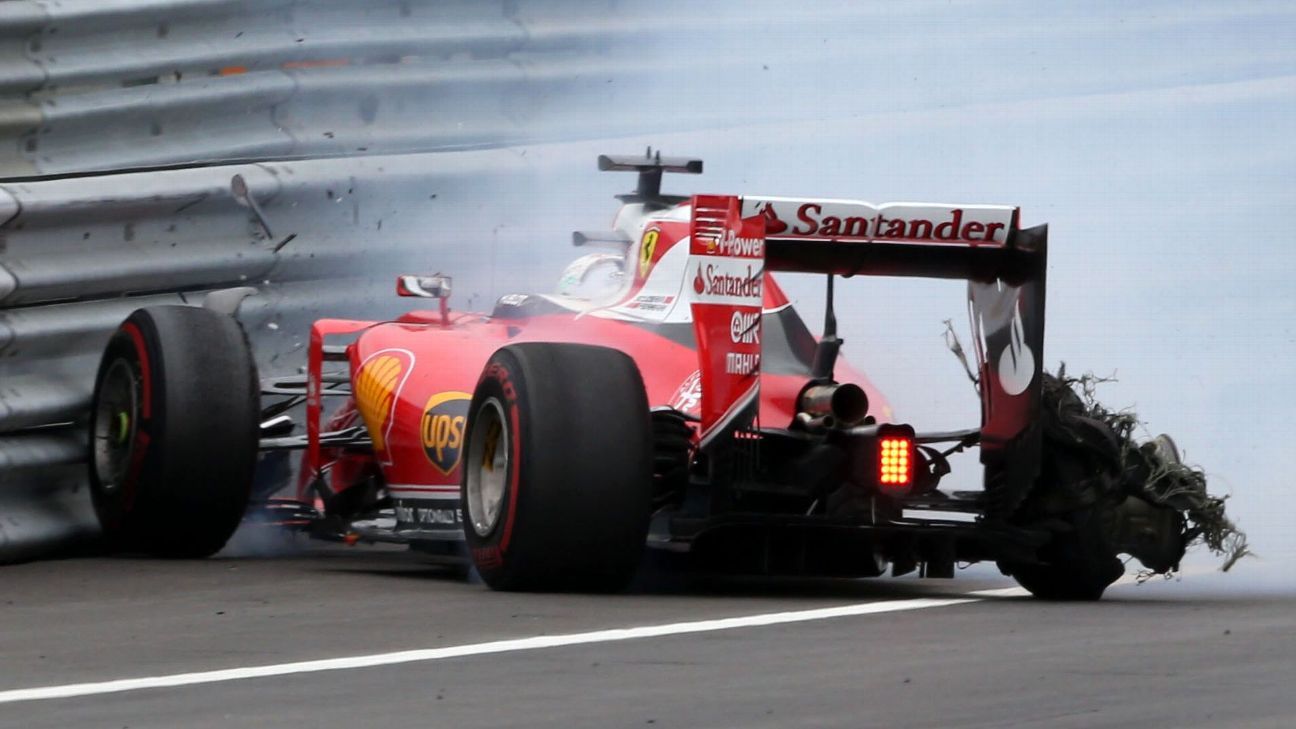 For example, Vettel himself commented on moments when his car or tires misbehaved unexpectedly during races, such as his infamous tire failure incident captured by ESPN. These incidents often undermine even the best drivers’ efforts and highlight why qualifying performance consistency and race stability do not always correlate directly.
Team Dynamics and Car Setup Priorities
Another important factor was how the Red Bull team prioritized car setups. The RB6 was often dialed in to peak for qualifying extracting single-lap speed and delivering under ideal conditions. This setup sometimes compromised race longevity and tire wear characteristics, leading to increased chances of mistakes or spins when conditions changed over long stints.
Moreover, during qualifying, Vettel had undivided support from engineers focusing solely on immediate maximum outputs, from optimal tire pressures to engine modes, allowing an ideal environment for error-free laps. During races, the engineers had to account for multiple competing factors, balancing performance and durability, which increased the potential for unpredictable moments.
Legacy of Consistency: What Vettel’s RB6 Performance Teaches Us
Vettel’s ability to avoid qualifying crashes on the RB6 while only spinning in races offers a nuanced lesson in racing psychology and engineering synergy. It underscores how profound car-driver harmony, mental focus, and strategic restraint can form a formidable triad for qualifying excellence.
This pattern also challenges assumptions about driver errors revealing that spins and crashes in races are often less about a driver losing it and more about navigating a complex, unstable environment where variables shift rapidly. Vettel’s career demonstrated mastery in managing these extremes, showing that qualifying and race performances require distinct skill sets and mental states.
Conclusion
Why did Sebastian Vettel never crash the RB6 in qualifying yet only spin in races? The answer lies in a fascinating combination of car design, meticulous approach, mental discipline, team strategy, and the very nature of the two distinct sessions. The RB6 provided a stable, fast platform perfectly tailored for Vettel’s controlled aggression in qualifying. Meanwhile, the unpredictable variables of races occasionally shattered this balance, leading to spins instead of outright crashes.
Vettel’s 2010 qualifying record is a testament to his precise driving style and deep understanding of his machinery an often overlooked aspect that contributed significantly to his success. This shift in perspective not only seasons our appreciation of Vettel’s talents but also invites deeper reflection on the subtle differences between qualifying speed and race endurance in Formula 1.

// Discussion